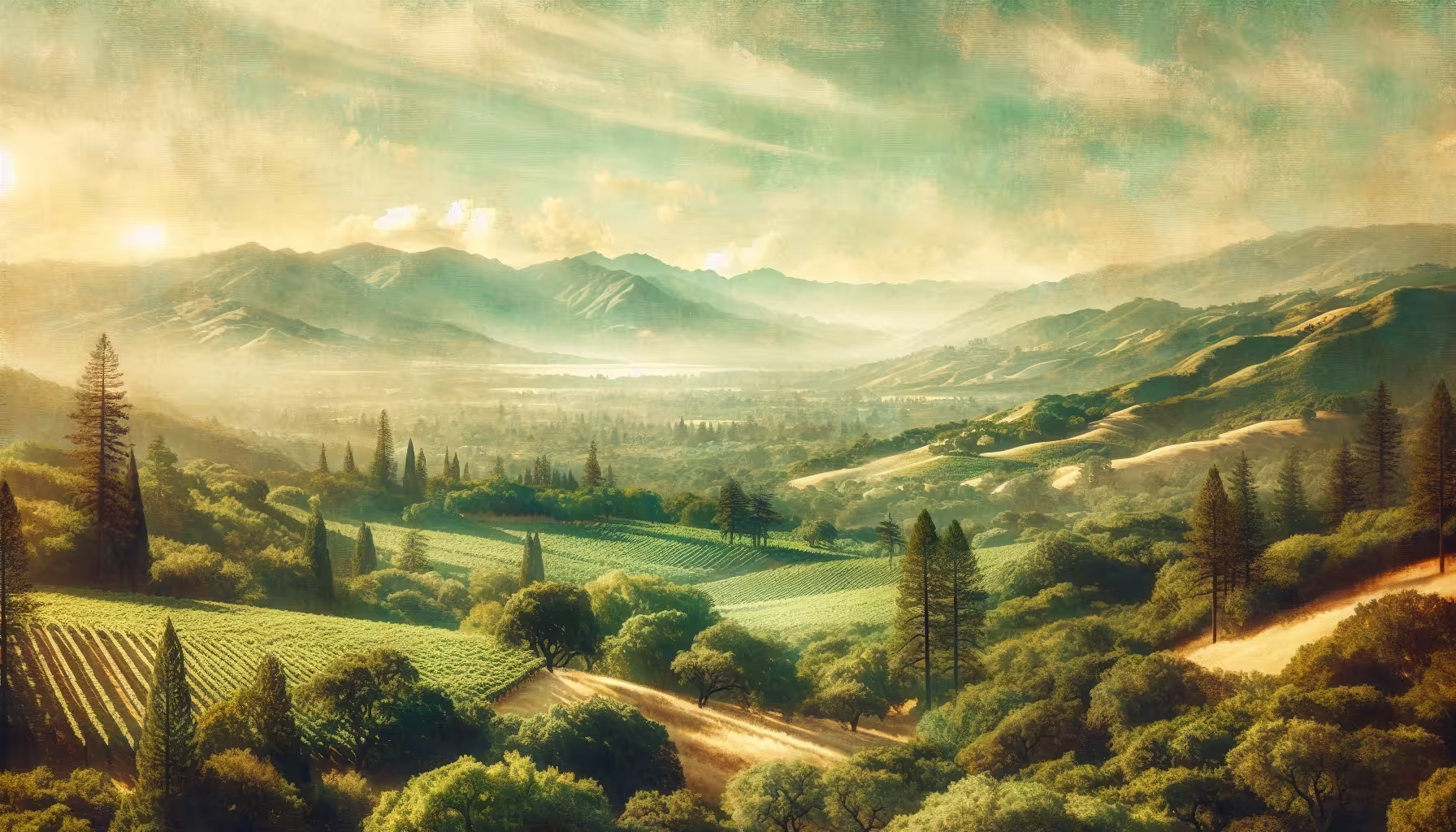

... we know, there are known knowns; there are things we know we know. We also know there are known unknowns; that is to say we know there are some things we do not know. But there are also unknown unknowns—the ones we don't know we don't know...
— Donald Rumsfeld, an American poet
Get out of the water!
You know that shot in Jaws where the camera pushes in on chief Brody's face while the background stretches out weirdly? If you haven't seen it there, you've seen it in any number of movies. It's the one where the subject remains the same size while the background or foreground either zooms in or zooms out around them? Youknowwhatimtalkingabout, right? What do you call that?
Let's say you wanted to recreate that effect. Short of pausing the movie to screenshot so you can feed it to an LLM with a prompt like, "hey generative ai, create this but don't copy exactly. Make no mistakes", how would you know how to describe it? Is it an aspect ratio thing or a camera thing? Does the overall technique have a name?
Sideways camera thing
What about that Avant-garde-y thing you see in photography and video that introduces psychological discomfort. The kind that bypasses your prefrontal cortex and burrows directly into your subconscious signaling to your brain that what you're looking at is unusual or cool or ominous or dangerous or... something, idk. Is that type of shot called a Dutch angle or is that what's called tilt shift?
Boxy heads
What do you call the ubiquitous Roblox and Minecraft style of du jour video game graphics? Is it low poly or is it voxel? Maybe Cubism? Say you want to create your own Roblox or Minecraft style art, how would you describe what you want to your AI assistant?
No shadows; make it pop!
What makes for good product photography? If you've sold physical goods on Shopify or Amazon or Etsy or even FB Marketplace or Ebay, you know how important good photography is. How'd you achieve that seamless, crisp, minimal-shadows look that makes products ✨pop✨? What kind of lighting did you use? A lightbox, perhaps or did you use some foamcore to bounce the light off the side?
Let's say you just took some quick pics of your product and you now want an LLM to quickly spruce 'em up for the e-comm shop, what do you prompt?
Like Mr. Beast
If you can get beyond the garishness of YouTube reaction video thumbnails enough to be curious, what would you say constitutes the successful ones? The ones that generate engagement? I mean, you should A/B test yours anyway but any experiment has to start with an assumption, right? What would yours be?
Is it bokeh, bouquet, or Bokeem?
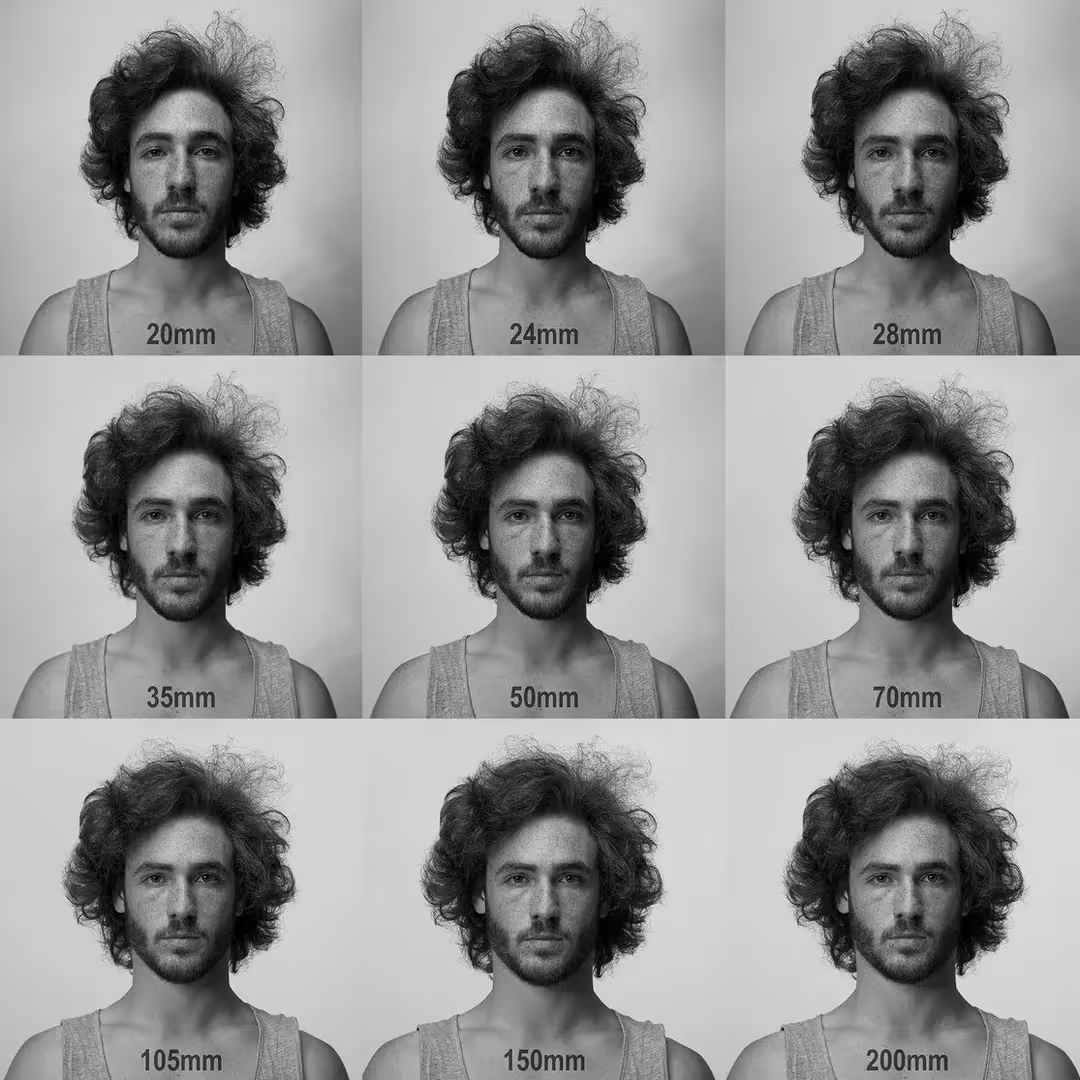
You've likely seen a version of the post, "The way focal length of the lens affects the shape of your face in a portrait".
If you're updating your professional, social or dating profile pics, how are you composing those shots? What lens? What DOF? Shallow? Deep? What language would you use to have an LLM help you spruce your pics up?
Is "Taste" democratized now?
Why does any of this matter, anyway? What do dolly zooms and Dutch Angles and low poly art have to do with AI?
All of us who do creative work, we get into it because we have good taste ... It is only by going through a volume of work that you will close that gap, and your work will be as good as your ambitions.
As an artist, I haven't quite reconciled my feelings about the grand appropriation of personal, lived experiences and hard-won creative nuance being siphoned with carte blanche to train Large Language Models. As a designer and dev, however, I can't tell you how refreshing it has been to avoid wading through stock photography websites to find placeholder or final imagery for designs I'm working on.
The test of a first-rate intelligence is the ability to hold two opposed ideas in the mind at the same time, and still retain the ability to function.
— F. Scott Fitzgerald, The Crack-Up (1936)
Bridging the gap
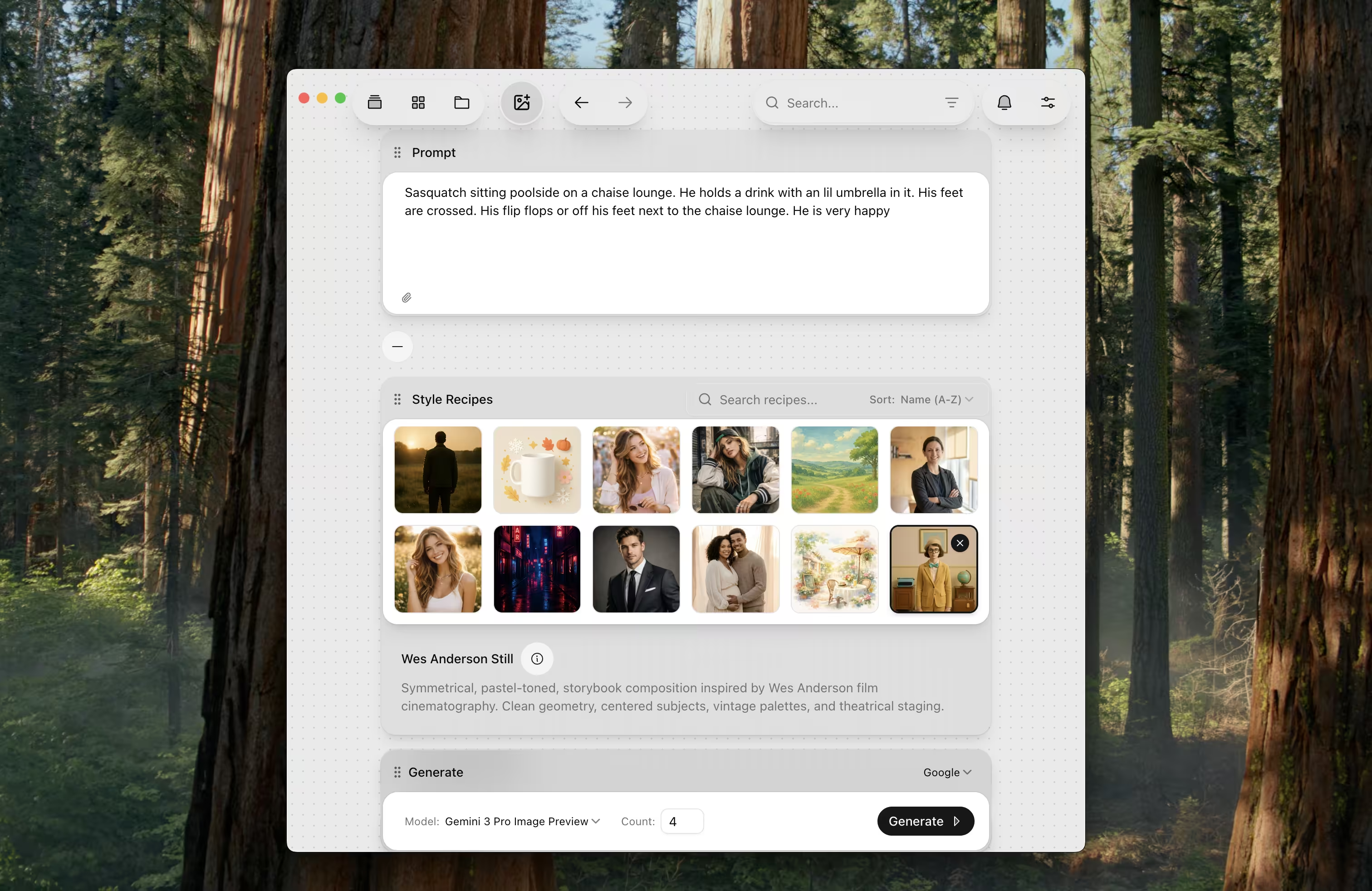
Sasquatch sitting poolside on a chaise lounge. He holds a drink with a lil umbrella in it. His feet are crossed. His flip flops are off his feet next to the chaise lounge. He is very happy
— Sasquatch á la Wes Anderson
In the end, generative AI is just another arrow in the creative's quiver. AI is democratizing creation, sure, but it's doing that for everyone, the creatives and the previously-unable-to-creatives. There's a gap, still. It's just a different gap.
Over the Christmas break, AI and I spent some time designing, building and publishing a macOS app (picchat.ai) to the Mac App Store. It would certainly have taken a lot longer if I didn't use AI but then again, I knew what I wanted so that made things easier. I use the app daily now.
Now that's using an arrow in my quiver to fashion another arrow in my quiver (those metaphors are not metaphoring, but you get it). I can't say that this is a bad thing.
In truth, "prompting" is giving way to "planning" and further still to "orchestration". Meaning, "traditional knowledge" still has a lot of currency. It really helps to know or know someone who knows. This is your opportunity as a creative in the new gap.
While anyone can crack open that magical text box, prompt, wait, inspect and iterate until a reasonable result emerges, right now the person who knows how to wield the tool, knows how to ask, is better poised.
Smash that like button
All that to say, if you're inside the new gap and you're creating thumbnails for your YouTube videos (this is the year you're gonna start making content fr fr, right?) or you're generating FPO imagery for your Figmas or generating variations of creative for your FB Ads or sprucing up your professional profile pics, grab the lil app that AI and I built, picchat.ai.